 OACAS Recognizes Kinship & Alternate Care Awareness Week 2026
When a child or youth cannot safely remain at home, care is about more than meeting their immediate needs. It is also about preserving the relationships and connections to family, culture and community that help shape who they are.
From September 14 to 18, OACAS and our member agencies are recognizing Kinship & Alternate Care Awareness Week and the family and community members who step forward to support children, youth and families across Ontario.
“Kin and alternate caregivers help children and youth hold on to the relationships, culture and sense of belonging that are essential to their well-being. This week, we recognize their invaluable role and thank them for the stability, connection and care they provide,” said Solomon Owoo, Chief Executive Officer of OACAS.
Who are kin and alternate caregivers?
Kin and alternate caregivers may be grandparents, aunts, uncles and other relatives. They can also be family friends, neighbours, teachers, coaches or members of a child or youth’s cultural community.
What they share is a meaningful connection to the child, youth or family. Care rooted in these relationships can help children and youth maintain connections to family, siblings, culture and community during a period of significant change.
Kinship and alternate care can take several forms:
Kinship by the numbers
Most child welfare involvement does not result in a child or youth leaving home. Ontario research shows that children and youth remain at home with their families in 97 per cent of child welfare investigations.
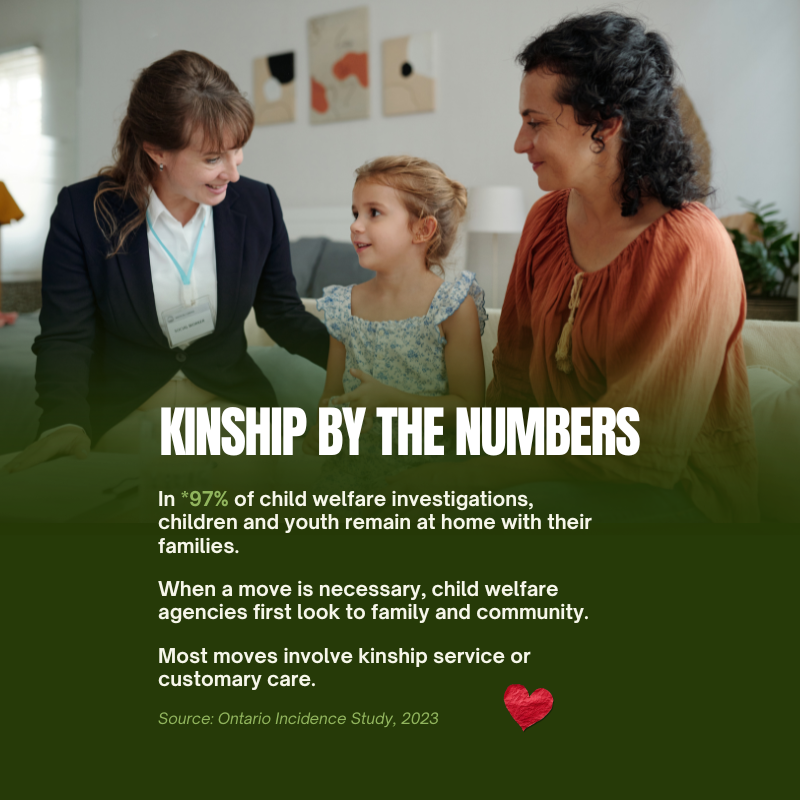 When a change of residence is necessary, child welfare agencies first look to family and community. Of the three per cent of investigations that result in a move, most involve kinship service or customary care.
These connections are particularly important for Indigenous and Black children and youth and 2SLGBTQ+ children and youth, who continue to be overrepresented in foster care.
Supporting the caregivers who step forward
Families and communities have always cared for their own. But becoming a kin or alternate caregiver can happen suddenly, requiring individuals to adapt their homes, finances and daily lives while helping a child or youth navigate significant change.
During Kinship & Alternate Care Awareness Week, we recognize those who open their homes, rearrange their lives and help children and youth stay connected to the people, cultures and communities that matter to them.
Their care makes a lasting difference.


